Cauliflower Is Ruining Your Dinners—And It's Entirely Your Fault
Let's be honest. If cauliflower has a bad reputation at your dinner table, that reputation was earned—but probably not by the vegetable itself. Cauliflower is one of the most misunderstood, underestimated, and consistently mistreated ingredients in the American home kitchen. And the way most of us cook it is quietly sabotaging both the flavor and the nutrition we're counting on.
This isn't a trendy take. It's a practical one. If you're putting in the effort to buy produce, prep it, and get it on the table during a busy week, you deserve results that actually taste good. So let's talk about what's going wrong—and what to do instead.
The Problem With How Most People Cook Cauliflower
The most common cauliflower mistake isn't complicated: it's steaming or boiling it into submission. You've probably done it. You cut the head into florets, drop them in a pot or a microwave-safe bowl with a splash of water, and cook until tender. It seems efficient. It seems fine.
It's not fine.
When you steam or boil cauliflower, a few things happen simultaneously. First, water-soluble nutrients—particularly vitamin C and several B vitamins—leach out into the cooking water, which you then pour down the drain. Second, the natural sugars and compounds that give cauliflower its subtle, nutty depth never get a chance to develop. What you're left with is a pale, slightly sulfurous, soft blob that needs a lot of help from butter, cheese, or seasoning just to be edible. No wonder it gets pushed to the edge of the plate.
Steaming isn't evil—it has its place. But as a default method for cauliflower? It's a flavor dead end.
What Roasting Actually Does
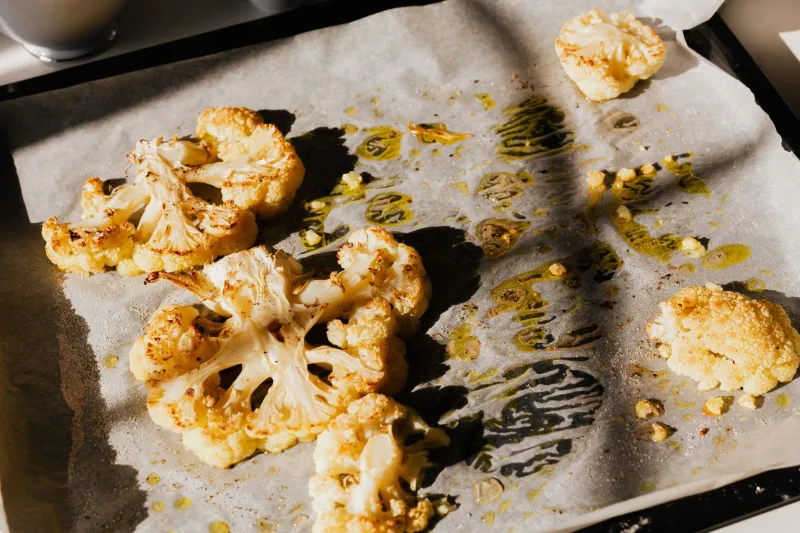
Here's where things get interesting. Roasting cauliflower triggers something called the Maillard reaction—the same chemical process that makes a good sear on a steak taste incredible, or turns the edges of your sheet pan chicken golden and crisp. When cauliflower hits a hot oven with a little fat, the outer surface caramelizes, the moisture evaporates, and the natural sugars concentrate.
The result is a completely different vegetable. Roasted cauliflower has crispy, slightly charred edges, a tender but not mushy interior, and a deep, almost sweet nuttiness that doesn't require much seasoning at all. It goes from bland side dish to something you actually want to eat.
The method is straightforward:
- Cut florets into even pieces, roughly 1.5 to 2 inches. Uneven cuts = uneven cooking.
- Toss with enough olive oil to lightly coat—don't be stingy, but don't drench them either.
- Spread them out in a single layer on a sheet pan. This is the non-negotiable step most people skip. Crowding the pan traps steam and undoes everything.
- Roast at 425°F for 25 to 30 minutes, flipping once halfway through.
That's it. No babysitting, no special equipment. Just better cauliflower.
When Sautéing Makes More Sense
Roasting is the gold standard, but it does require oven time—which isn't always realistic on a Tuesday at 6:45 PM when everyone's starving. That's where a hot skillet comes in.
Sautéing cauliflower over medium-high heat in a cast iron or stainless steel pan can deliver similar browning results in about 10 to 12 minutes. The key is the same as roasting: high heat, enough fat, and patience. Don't stir constantly. Let the florets sit undisturbed for two to three minutes at a time so they actually develop color instead of just steaming in their own moisture.
A wide pan matters here. If you're using a small skillet and piling in two cups of cauliflower, you're back to the same crowding problem. Work in batches if you need to.
Sautéed cauliflower is also extremely versatile as a base. Toss it with chickpeas and a handful of spices for a quick weeknight bowl. Add it to a grain salad. Fold it into scrambled eggs or a frittata. The browned flavor profile holds up across a huge range of dishes.
The Nutrition Angle (It Actually Matters Here)
Cauliflower is a legitimate nutritional workhorse—high in fiber, vitamin C, vitamin K, folate, and a range of antioxidants. But as mentioned earlier, boiling and steaming send a meaningful portion of those water-soluble nutrients down the drain.
Roasting and sautéing retain significantly more of the vegetable's nutritional value because you're not leaching anything into water. The fat you use to roast also helps your body absorb fat-soluble nutrients more effectively. So the method that tastes better also happens to be better for you. That's a pretty easy trade.
A Few Flavor Moves Worth Knowing
Once you've nailed the technique, the seasoning options are wide open. Cauliflower has a mild flavor that works with both bold and subtle profiles. A few combinations that consistently deliver:
Warm spice route: Toss with olive oil, cumin, smoked paprika, and a pinch of turmeric before roasting. Finish with a squeeze of lemon and fresh cilantro.
Umami-forward: Roast plain, then drizzle with a mixture of soy sauce, sesame oil, and a little honey right when it comes out of the oven. The residual heat does the work.
Simple and sharp: Roasted florets with garlic, red pepper flakes, and a generous hit of parmesan. Classic for a reason.
Tahini finish: Roast with just olive oil and salt, then drizzle tahini thinned with lemon juice over the top. Works as a side or stuffed into a pita with whatever protein you have going.
None of these require a special trip to the store. They're built from pantry staples most of us already have.
Making It Work in a Real Week
The practical case for getting cauliflower right isn't just about one dinner—it's about what you can do with a well-cooked batch across multiple meals. Roast a full head on Sunday and you've got a component that works as a side on Monday, folded into a grain bowl on Wednesday, and tossed into a quick stir-fry on Thursday.
That kind of flexibility is exactly what smart weeknight cooking is built on. A vegetable that's been steamed into mush doesn't give you that. A properly roasted one does.
Cauliflower isn't the problem. The method is. Fix the method, and you've got one of the most adaptable, affordable, and genuinely satisfying vegetables in your weekly rotation—without adding a single extra step to your cooking process.