Build Your Snack Stack: A Mix-and-Match High-Protein System for Every Work Setup
Here's a scenario that probably sounds familiar: you had a solid breakfast, you've got dinner planned, and your meal prep game is reasonably on point. But somewhere around 2:30 in the afternoon, everything falls apart. The energy dips, the focus blurs, and suddenly you're either raiding the office snack cabinet, placing a Grubhub order you didn't budget for, or just pushing through until dinner on nothing but caffeine and willpower.
That gap between breakfast and dinner is where most meal plans quietly collapse — and snacking is almost always the missing piece.
The good news: you don't need to overhaul your entire routine. You just need a smarter snack system. Specifically, a modular one.
Why Modular Snacking Changes the Game
Modular snacking borrows the same logic behind a well-planned dinner rotation: instead of deciding from scratch what to eat every time hunger strikes, you build from a small set of interchangeable components. Proteins, vegetables, carbs, and fats — each category gets a handful of options, and you mix and match based on what you have available, what you're craving, and where you're eating.
The result is snacks that are genuinely satisfying (not just calorically filling), portable enough for real life, and varied enough that you don't get bored by Wednesday. More importantly, a high-protein snack system stabilizes blood sugar between meals, which is the actual reason you're hitting that mid-afternoon wall in the first place.
Let's break down the four building blocks, then look at how to apply them across three different work environments.
The Four Snack Components
1. Proteins (Pick One or Two)
This is the anchor of any snack that's actually going to hold you over. Without adequate protein, you'll be hungry again in 45 minutes.
- Hard-boiled eggs (batch cook a week's worth on Sunday)
- Greek yogurt (plain, full-fat or 2% — the flavored stuff is usually loaded with sugar)
- Cottage cheese
- Canned tuna or salmon (single-serve pouches are ideal for portability)
- Edamame (frozen, thawed overnight in the fridge)
- Deli turkey or rotisserie chicken pulled into strips
- String cheese or Babybel rounds
- Roasted chickpeas
2. Vegetables (Pick One)
Vegetables add volume, fiber, and crunch — all things that make a snack feel like more than a handful of something. Cut them on Sunday and store in small containers or zip bags.
- Sliced bell peppers (red and orange are sweeter and easier to enjoy raw)
- Cucumber rounds
- Baby carrots or celery sticks
- Cherry tomatoes
- Snap peas
- Broccoli florets
3. Carbs (Optional — Pick One When You Need Sustained Energy)
Not every snack needs a carb component, but if you're in back-to-back meetings or working through a mentally demanding block, a quality carb source helps maintain focus.
- Whole grain crackers (RXBARs, Triscuits, or Simple Mills are solid picks)
- A small piece of fruit — apple, banana, or a handful of grapes
- Rice cakes
- Oatmeal (instant packets if you're at an office with a microwave)
- A small whole wheat tortilla
4. Fats (A Small Amount Goes a Long Way)
Healthy fats slow digestion and contribute to that "I'm actually satisfied" feeling that keeps you from reaching for more food 20 minutes later.
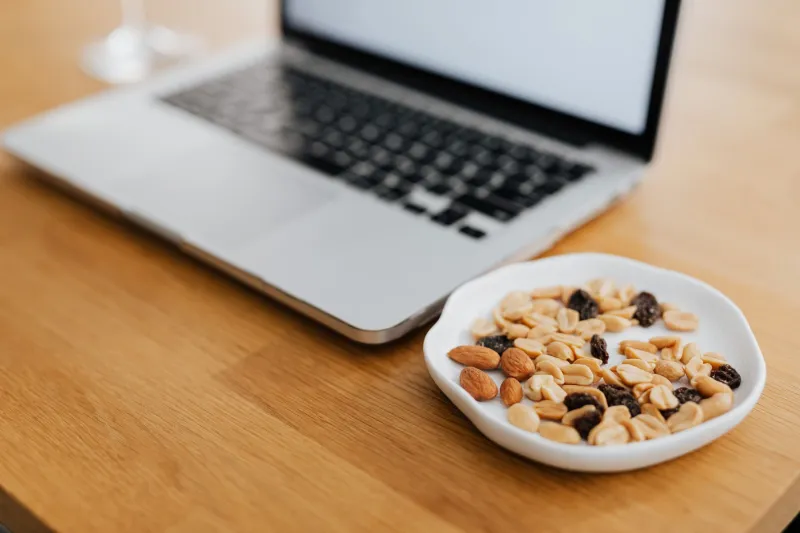
- A small handful of nuts (almonds, walnuts, or cashews)
- Nut butter packets (Justin's individual packs are easy to stash anywhere)
- Avocado (half of one, if you're somewhere you can eat it fresh)
- Hummus (single-serve cups are perfect for portability)
- A few olives
Templates by Work Environment
For the Office Worker
If you're commuting and sitting at a desk, portability and shelf stability matter most. You want snacks that can live in a drawer, a work bag, or an office mini-fridge without requiring much prep on-site.
Snack Stack Example:
- Protein: Single-serve tuna pouch + string cheese
- Vegetable: Baby carrots (pre-packed in a small container)
- Carb: Whole grain crackers
- Fat: Nut butter packet
Drawer Staples to Keep at Your Desk: Roasted chickpeas, mixed nuts, individual nut butter packs, protein bars (look for ones with at least 15g protein and minimal added sugar), and shelf-stable edamame pouches.
Office Fridge Staples: Greek yogurt cups, hard-boiled eggs (labeled with your name — we've all been there), and pre-cut vegetable containers.
For the Remote Worker
Working from home sounds like it should make healthy snacking easier, but the kitchen being five steps away is actually a trap. Without structure, remote workers tend to graze constantly or forget to eat entirely and then overcompensate.
The fix: treat your home snacks like you're packing a work bag. Prep your components Sunday night, portion them into containers, and put them at eye level in the fridge. When snack time hits, you grab — you don't forage.
Snack Stack Example:
- Protein: Cottage cheese with everything bagel seasoning
- Vegetable: Sliced cucumber and cherry tomatoes
- Carb: Rice cakes
- Fat: Half an avocado
Remote Worker Bonus Tip: Set a snack alarm. Seriously. Without the natural rhythm of an office environment (passing the kitchen, seeing coworkers eat), it's easy to lose track of time and arrive at dinner absolutely ravenous — which is exactly when impulse DoorDash orders happen.
For the Hybrid Worker
Hybrid schedules are the trickiest because your snacking environment changes day to day. The key is building a snack kit that works in both settings without requiring you to re-think it every morning.
Invest in a small insulated lunch bag that lives in your work bag. Stock it with a rotating selection from your four components. On office days, it goes with you. On home days, you pull from the same prepped containers in your fridge. Same system, same mental overhead, regardless of where you're working.
Snack Stack Example:
- Protein: Hard-boiled eggs + roasted chickpeas
- Vegetable: Snap peas
- Carb: Apple
- Fat: Small handful of almonds
Timing Your Snacks Strategically
Modular snacking works best when it's intentional, not reactive. Rather than waiting until you're already hungry (and therefore already making worse decisions), aim for a snack window about two to three hours after breakfast and another one mid-afternoon.
For most standard work schedules, that looks like:
- Morning snack: Around 10–10:30 a.m.
- Afternoon snack: Around 2:30–3 p.m.
Adjust based on when you eat breakfast and dinner. The goal is to arrive at each meal hungry but not depleted — that's when you make the best food choices and actually enjoy what you're eating.
A Snack System Is a Meal Plan Upgrade
Most people think of snacks as an afterthought — something you grab when hunger catches you off guard. But when you build a modular snack system, you're actually completing your meal plan. Breakfast, snack, lunch, snack, dinner. Each piece supports the next, your energy stays steadier throughout the day, and the impulsive vending machine run or afternoon delivery order becomes a lot less tempting.
Start with two or three proteins, three vegetables, and a couple of fat options. Prep them on Sunday. Build from there. It doesn't have to be complicated — it just has to be ready.