Stop Chasing the 15-Minute Dinner: How Cooking a Little Longer Actually Frees Up Your Week
Scroll through any food account on TikTok or Instagram and you'll see the same promise repeated endlessly: dinner in 15 minutes, no effort required. It sounds like the answer to every exhausted weeknight. But here's a question worth sitting with — if ultra-fast recipes are saving us so much time, why does the "what's for dinner?" panic still hit at 6 p.m. almost every single night?
The uncomfortable truth is that the 15-minute dinner myth doesn't actually save time. It just moves the chaos around.
The Hidden Cost of Speed Cooking
When you build your dinner routine around the fastest possible meals, you end up making a fresh decision every single evening. You're scanning the fridge, improvising, running out for a missing ingredient, or scrolling through recipes while the kids are asking for a snack. That daily mental labor adds up fast — and it's exhausting in a way that has nothing to do with how long the actual cooking takes.
Decision fatigue is real. Research in behavioral psychology has long shown that the more choices we make throughout the day, the worse we get at making them. By dinnertime, most busy professionals and parents are already running on fumes. Handing yourself yet another open-ended question — "what can I throw together in 15 minutes?" — is a recipe for ordering pizza again.
Speed cooking also tends to rely on convenience shortcuts that cost money: pre-cut vegetables, expensive rotisserie chicken every week, or meal kit subscriptions that pile up faster than you can cook them. The time you save at the stove often gets quietly spent at the grocery store, the checkout line, or the delivery app.
What "Slow Fast Cooking" Actually Looks Like
Here's the reframe: instead of asking "how fast can I make dinner tonight," start asking "how can I set up this week so dinner practically makes itself?"
That's the core idea behind what we're calling slow fast cooking — a meal planning approach where you invest 30 to 45 minutes on two or three strategic nights, building in components that do double or triple duty across the week. It's not batch cooking in the traditional sense (no Sunday marathons required). It's smarter sequencing.
For example:
- Monday night: You roast a sheet pan of chicken thighs seasoned with a simple herb marinade. Takes about 40 minutes including prep. But you make enough for four servings. Monday's dinner is done, and you've just pre-loaded Tuesday's grain bowl and Wednesday's wrap without any extra effort.
- Wednesday night: You cook a big pot of farro or brown rice while you're already standing at the stove making something else. The grain goes into the fridge and becomes the base for two more meals later in the week.
- Friday night: You spend 35 minutes on a proper stir-fry using whatever vegetables are left in the crisper. Intentional, satisfying, zero food waste.
None of these nights are fast in the 15-minute sense. But because each one builds forward, Thursday and Saturday practically cook themselves.
Pre-Marinated Proteins Are Your Secret Weapon
One of the highest-leverage habits in slow fast cooking is marinating proteins ahead of time — not hours ahead, but days ahead. Most marinades (think citrus-garlic chicken, soy-ginger pork, or a simple yogurt-herb mixture) actually improve with time. Spending five minutes on a Sunday or Monday evening to prep two or three proteins means you pull them out of the fridge already flavored, already tenderized, and ready to cook.
This single habit eliminates one of the biggest friction points in weeknight cooking: the flavor gap. When you're throwing together a 15-minute dinner from scratch, seasoning is usually an afterthought. Pre-marinated proteins taste like you actually planned dinner, because you did — just not at the last second.
Keep a rotation of three or four go-to marinades that you know your household enjoys. Write them on an index card and stick it inside a cabinet door. Decision made. Flavor sorted.
Batch-Cooked Grains: The Unsung Hero of Weeknight Sanity
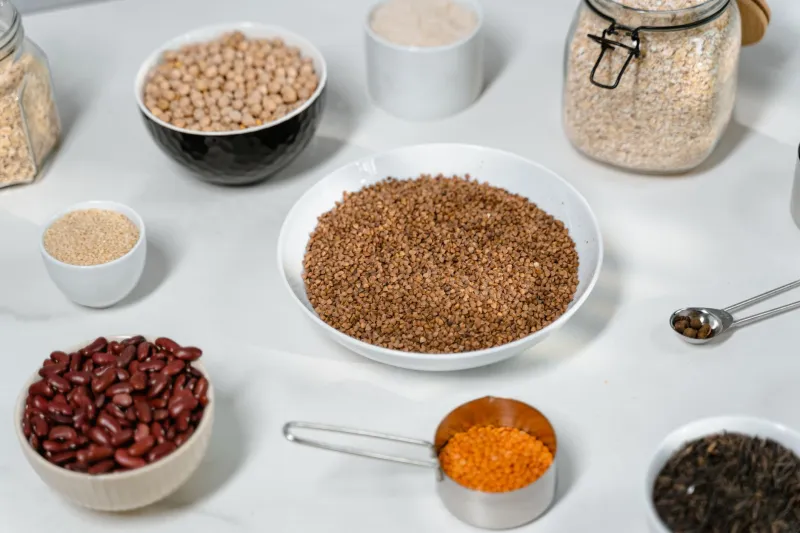
If pre-marinated proteins are the headline act, batch-cooked grains are the supporting cast that holds everything together. A container of cooked quinoa, farro, or even simple white rice in the fridge is genuinely transformative. It's the difference between a grain bowl that takes eight minutes and one that takes 30.
Cook a large batch once or twice a week. Season it lightly — a little olive oil, salt, maybe a squeeze of lemon — so it works in multiple contexts. Pair it with your pre-marinated protein one night. Toss it with canned chickpeas and roasted vegetables the next. Stir it into a quick soup on a night when everyone's too tired to think.
Grains keep well in the refrigerator for up to five days and reheat in minutes. They're cheap, filling, and endlessly flexible. There's a reason every professional meal planner keeps a grain in rotation — it's one of the few genuinely time-saving habits that actually delivers.
Building a Week That Works With Your Real Schedule
The other thing that slow fast cooking gets right is honesty about your schedule. Not every night is the same. Most busy households have two or three nights per week where 35 to 45 minutes of cooking is genuinely feasible — maybe Monday, Wednesday, and Saturday. The other nights? You're running from activities, finishing a work deadline, or just depleted.
Slow fast cooking says: cook well on your good nights, coast on your hard nights. Set up your components strategically so that your exhausted Tuesday self just has to assemble, not create.
That's a fundamentally different mindset than trying to compress every single dinner into 15 minutes. Instead of fighting your schedule, you're working with it.
The Real Time Savings Are in the Decisions You Don't Have to Make
At the end of the week, the households that eat well without burning out aren't the ones who found the fastest recipes. They're the ones who made fewer decisions per dinner. They built systems — even loose, flexible ones — that removed the nightly scramble.
So the next time you see a "ready in 15 minutes" recipe promising to change your life, ask yourself: does this build into anything? Does it set me up for tomorrow, or does it just solve tonight?
Sometimes a 40-minute dinner that gives you three easy meals is worth more than five rushed ones that leave you starting from zero every evening. That's not slow cooking. That's just cooking smart.