One Protein Won't Cut It: How to Build a Smarter Weekly Rotation

Photo by Photo by qi bin on Unsplash on Unsplash
Here's a scene that probably sounds familiar: Sunday rolls around, you've got four chicken breasts thawed and a week of good intentions ahead. By Wednesday, you're reheating the same rubbery, slightly sad slab for the third time and reaching for your phone to order Thai food instead. The plan wasn't bad. The protein was just doing too much heavy lifting.
The idea that one protein can anchor your entire week is appealing — it's simple, it's efficient, and it feels like a clean solution. But it's also kind of a myth. Different proteins aren't interchangeable. They behave differently under heat, they store differently, they cost differently, and they transform into different things when you try to repurpose them. Building a meal rotation that actually works means treating proteins the way a good chef does: as distinct tools, each with a specific job.
Here's how to rethink your weekly protein lineup — not by adding more complexity, but by getting strategic about what you're already reaching for.
Why Chicken Breast Keeps Letting You Down
Chicken breast is the default protein for a reason. It's lean, widely available, and takes on flavors well when cooked right. But it has a serious weakness: it doesn't hold up to repetition or repurposing the way other proteins do.
Once cooked, chicken breast dries out fast. Reheating it is a battle you often lose. And while it works beautifully in stir-fries, grain bowls, and salads on day one, it gets increasingly unpleasant as the week goes on. It's also a one-note texture — firm, dense, and not particularly forgiving if you overcook it by even a few minutes.
This doesn't mean you should stop buying it. It means you should stop expecting it to do everything.
The Case for Rotating Four Proteins Instead of One
A smarter approach is to anchor your week around three or four proteins that cover different use cases. Think of it like a relay race — each protein carries the baton for a specific leg, and together they get you across the finish line without anyone burning out.
Here's a practical framework:
Eggs are your fastest, cheapest, most flexible weeknight option. Scrambled, fried, poached, or baked into a frittata — eggs are done in under ten minutes and cost next to nothing per serving. They're the protein you reach for when the plan falls apart and dinner needs to happen in twenty minutes. Batch-cook a frittata on Sunday and you've got breakfast or lunch handled for three days without any additional effort.
Canned fish — tuna, salmon, sardines — is genuinely underrated in the American kitchen. It requires zero cooking, integrates into salads, grain bowls, and pasta almost instantly, and delivers a serious protein punch with minimal prep time. A can of good-quality tuna costs less than two dollars and takes thirty seconds to open. For busy professionals who don't have time to cook every night, canned fish is a legitimate dinner strategy, not a last resort.
Ground turkey or beef is your workhorse protein — the one that scales beautifully, freezes well, and transforms into wildly different dishes depending on seasoning. One pound of cooked ground turkey can become taco filling on Monday, a pasta sauce on Wednesday, and a stuffed pepper on Friday. It's also one of the easiest proteins to cook in large batches without any real skill required, which makes it ideal for Sunday prep sessions.
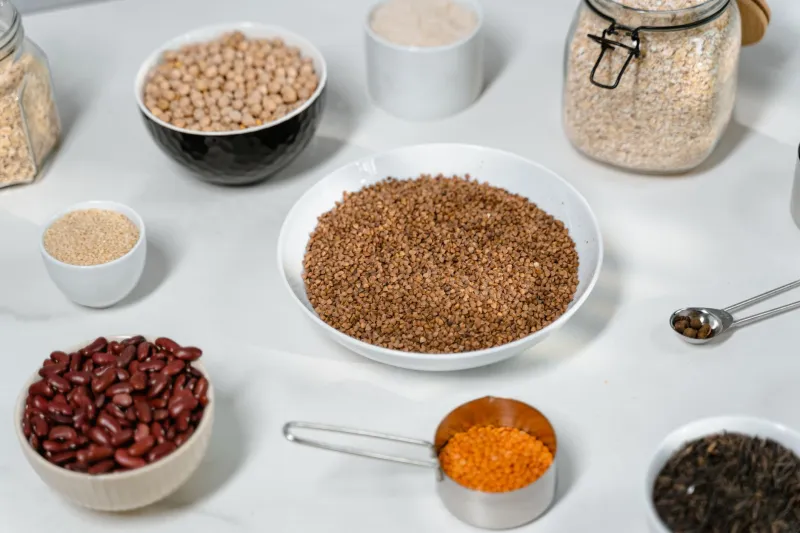
Legumes — lentils, chickpeas, black beans — are the protein that most people underestimate until they start using them regularly. They're cheap, they take on flavor aggressively, and they work in almost every cuisine. A pot of lentils cooked on Sunday can become soup, a grain bowl topping, a taco filling, or a salad base throughout the week. They also hold up better in the fridge than most proteins, which means day-four lentils are just as good as day-one lentils.
Tofu fits into this rotation too, particularly if you're reducing meat intake. Firm tofu, pressed and pan-fried until crispy, holds its texture well across multiple meals and absorbs marinades more effectively than chicken breast does. It's also significantly cheaper per serving in most US markets.
How to Assign Proteins to Your Week
Once you've accepted that you need more than one protein in your rotation, the next step is figuring out which one to use when. Here's a simple decision matrix:
- Monday through Tuesday: Use the protein that required the most prep — the one you cooked on Sunday. Ground turkey, roasted chicken thighs (yes, thighs — they reheat better than breasts), or a pot of legumes.
- Wednesday: Midweek is when energy drops. This is egg night, or canned fish night. Something that comes together fast without requiring you to think too hard.
- Thursday: Use whatever's left from your Sunday prep, transformed into something different. Ground turkey that was tacos on Monday becomes a pasta sauce. Lentils that were a grain bowl topping become soup.
- Friday: Treat yourself, but keep it smart. A piece of salmon that takes twelve minutes in the oven, or a tofu stir-fry that comes together while the rice cooks.
Budget and Batch Cooking Don't Have to Be Separate Conversations
One of the reasons people default to chicken breast is cost — it's often the cheapest animal protein at the grocery store. But when you factor in the full rotation, legumes and eggs bring your weekly protein spend way down, which means you can afford to spend a little more on quality where it matters (a good piece of salmon on Friday suddenly feels a lot less extravagant when Monday through Wednesday cost almost nothing).
Batch cooking also works differently depending on the protein. Eggs don't batch well as scrambled eggs, but a frittata holds up for days. Ground turkey batches beautifully. Chicken breast does not. Understanding these distinctions is what separates a meal prep plan that works from one that ends in a takeout order by Tuesday.
The Real Goal: A Rotation That Feels Like Variety
The point isn't to eat five different proteins just for the sake of variety. It's to build a system where each protein is doing the job it's actually suited for — so nothing feels repetitive, nothing goes to waste, and you're not fighting your own dinner plan by Wednesday.
Chicken breast can stay in the rotation. It's just not the whole team.