Why Restaurant Food Hits Different—And How to Get Closer at Home
You make chicken piccata at home using a recipe from a reputable source. Fresh lemon, good capers, real butter. It's fine. Maybe even pretty good. But it doesn't taste like the version at that Italian place you love—the one that makes you close your eyes for a second when you take the first bite.
What are they doing that you're not?
This question frustrates a lot of home cooks, and the usual answers—"restaurants use better ingredients" or "professional chefs just have more skill"—are both partially true and largely unhelpful. The real gap is more specific, and more closeable, than most people realize.
Heat: The Biggest Advantage Restaurants Have
Commercial kitchen stoves put out anywhere from 25,000 to 35,000 BTUs of heat per burner. A typical home gas range tops out around 12,000 to 15,000 BTUs. Electric and induction vary, but the point stands: restaurant kitchens operate at a level of heat intensity that most home setups simply can't match.
Why does this matter? High heat creates the Maillard reaction—the browning process that produces hundreds of flavor compounds. It's what makes a seared scallop taste deeply savory instead of just cooked. It's what gives stir-fry that smoky, slightly charred quality called wok hei. It's what turns the bottom of a paella pan into a golden crust of concentrated flavor.
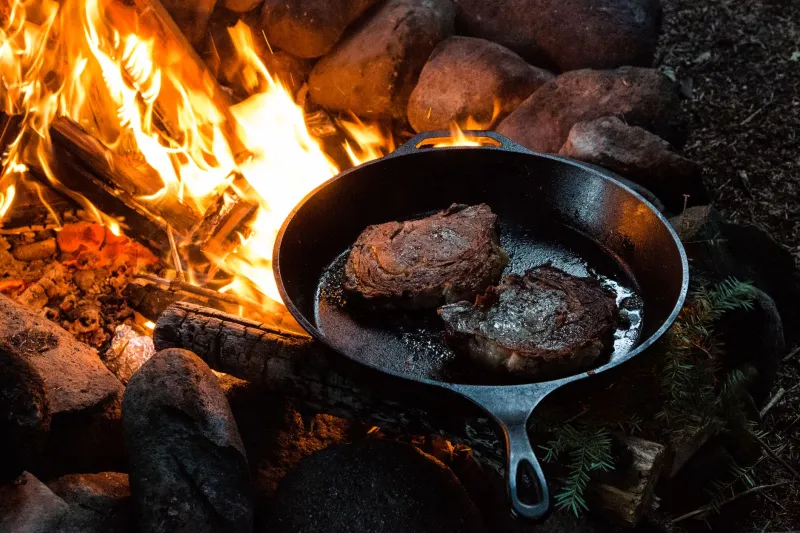
At home, you can't fully close this gap, but you can get closer. Cast iron skillets and carbon steel pans retain and radiate heat more effectively than most nonstick or thin stainless pans. Preheat them longer than you think you need to—five to seven minutes over medium-high heat before anything goes in. And don't crowd the pan. Crowding drops the pan temperature immediately, which turns a sear into a steam.
Fat: More Than You Think, Used Differently
Restaurants use significantly more fat than most home cooks are comfortable with, and they use it strategically throughout cooking—not just at the start.
A classic French restaurant technique called monter au beurre—finishing a sauce by swirling in cold butter at the end—adds richness, gloss, and a silky mouthfeel that's nearly impossible to replicate otherwise. That shine you see on pasta dishes and pan sauces at restaurants? That's usually butter added off heat at the last moment.
Oil choice matters too. Restaurants often cook with neutral, high-smoke-point oils (like refined avocado or grapeseed) at high heat, then finish with more flavorful fats. They're not using extra virgin olive oil to sear a steak—they're saving it for where its flavor actually comes through.
At home, try this: cook your protein in a neutral oil, then add a tablespoon of butter in the last two minutes of cooking and baste the meat with it. Finish your pasta sauce by pulling the pan off heat and stirring in a small knob of cold butter right before plating. These are small changes with noticeable results.
Salt: The Seasoning Gap Is Bigger Than You Think
This one is hard to hear, but it's important: restaurant food tastes better partly because it's seasoned more aggressively than most people cook at home. Not aggressively to the point of being salty—aggressively in the sense that salt is applied at multiple stages and in the right amounts to actually season food, not just lightly dust it.
Pasta water should be salty enough to taste like mild ocean water—most home cooks use a fraction of the salt required. Proteins should be salted well in advance (ideally 30 to 45 minutes before cooking, or overnight for larger cuts) so the salt has time to penetrate. Sauces and soups should be tasted and adjusted at every stage, not just at the end.
Restaurant cooks also use kosher salt almost exclusively for cooking. Its larger, flakier crystals are easier to feel and control when seasoning by hand, and its flavor is cleaner than iodized table salt. If you're not already using Diamond Crystal or Morton kosher salt as your everyday cooking salt, make the switch.
Stock, Sauces, and the Flavor Foundation
One of the least-discussed advantages professional kitchens have is time and volume. They make their own stocks in large batches—veal, chicken, fish, vegetable—and reduce them into intensely flavored bases that become the backbone of sauces, braises, and risottos. A restaurant's "pan sauce" might be built on a stock that took eight hours to make.
Home cooks aren't going to make 10-gallon batches of veal stock on a Tuesday night, and that's fine. But you can close the gap meaningfully with a few adjustments.
Keep a bottle of good-quality, low-sodium chicken stock in your fridge (not pantry—the refrigerated kind in the produce section tends to have better flavor than shelf-stable cartons). When you make a pan sauce, deglaze with wine or stock and let it reduce by at least half before adding any butter or cream—concentration is where flavor lives. A small jar of tomato paste adds deep, savory richness to braises and soups in a way that canned tomatoes alone can't match.
For umami depth—that savory, hard-to-name quality that makes food taste more complete—restaurants often rely on ingredients home cooks overlook: anchovy paste dissolved into a sauce, a splash of fish sauce in a braise, a parmesan rind simmered in soup. These don't make food taste fishy or cheesy. They make it taste like more of itself.
Plating and Resting: The Last Two Inches
Restaurant dishes are plated immediately before they reach the table. Home cooks often let food sit while they finish other elements or get everyone seated. Resting is important for proteins—it's not optional—but there's a difference between a planned five-minute rest and food that's been sitting on the stove going cold and losing texture.
The fix is simple: sequence your cooking so the last thing you finish is the thing that needs to be hot. Vegetables and sides can sit. Pasta should be plated the moment it's sauced. Proteins come off the heat, rest briefly, and go straight to the plate.
You're not going to turn your kitchen into a restaurant. You don't need to. But understanding why the gap exists—and targeting a few specific spots where the distance is actually closeable—means your next home-cooked meal can get a lot closer to that eyes-closed moment than you might expect.