Why You Keep Bailing on Recipes Halfway Through (And How to Stop)
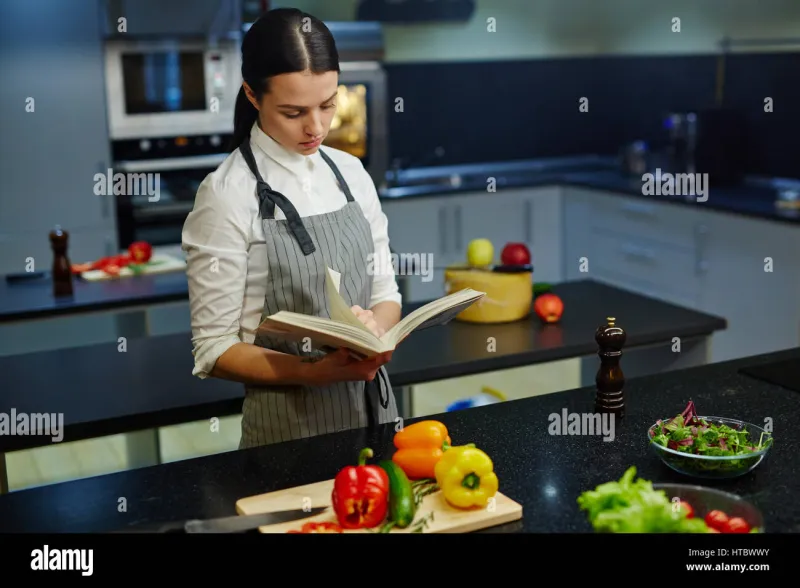
Photo: home cook reading recipe in kitchen with ingredients on counter, via c8.alamy.com
It happens to almost everyone. You find a recipe that looks genuinely exciting, you buy most of the ingredients, you start cooking—and then you hit a wall. Maybe it's a technique you've never tried. Maybe it's an ingredient you skipped at the store because you weren't sure what it was. Maybe the recipe just assumes a level of confidence you don't quite have yet.
So you pivot. You improvise badly, it tastes off, and you quietly order pizza.
Here's the thing: the recipe probably wasn't the problem. The real issue is that most home cooks don't have a reliable way to figure out which parts of a recipe actually matter and which ones are just suggestions wearing a serious face. Once you can tell the difference, you stop abandoning ship—and you start finishing what you started.
The Real Reason You Quit
Abandoning a recipe mid-cook almost never happens because the recipe is too hard. It happens because something unexpected shows up and you don't know whether ignoring it will ruin dinner or barely matter.
Say a recipe calls for fish sauce and you don't have any. Is that a dealbreaker? What about tamarind paste, or a specific cut of meat, or a technique like blooming spices in oil? Some of those matter enormously. Some of them are basically flavor suggestions. But without a framework for knowing which is which, every unfamiliar element feels like a potential disaster—and the safest response feels like starting over with something simpler.
That anxiety is what's actually killing your dinners, not the recipes themselves.
Think in Layers, Not Steps
A useful way to approach any recipe is to mentally sort its components into three buckets: structure, flavor, and finish.
Structure includes anything that determines whether the dish works on a physical level. Ratios in baking. The fat needed to keep a sauce from breaking. The liquid content in a braise. These are the parts you don't mess with unless you really know what you're doing, because changing them changes the outcome in ways that are hard to fix.
Flavor is where most of the flexibility lives. Herbs, spices, aromatics, acids—these elements shape the taste of a dish, but they're rarely so precise that a substitution destroys everything. If a recipe calls for fresh thyme and you have dried, you're not ruining dinner. If it wants shallots and you have a regular onion, that's almost always fine. The dish will taste a little different, but it'll still taste like dinner.
Finish covers the final touches: a squeeze of lemon, a drizzle of good olive oil, a handful of fresh herbs on top. These matter more than most people realize for how a dish feels when you eat it, but they're also the easiest things to adapt. If you don't have the exact garnish, something in the same spirit usually works.
Once you start reading recipes through this lens, unfamiliar ingredients stop being roadblocks. You can quickly ask yourself: is this a structural element or a flavor element? That one question changes everything.
The Swaps That Actually Work
Some substitutions are so reliable they're basically rules.
Acids are almost always interchangeable in terms of function—lemon juice, lime juice, white wine vinegar, and rice vinegar all bring brightness to a dish, just with slightly different flavor profiles. If a recipe needs acid and you're out of one, another almost always works.
Fresh herbs and dried herbs can swap in most cooked applications (use about a third as much dried as fresh, since it's more concentrated). The exception is when fresh herbs are added at the end for freshness—dried won't give you the same result there.
Alliums—onions, shallots, leeks, scallions—are largely interchangeable in cooked dishes. The flavor intensity differs, but the role they play doesn't.
Neutral oils are almost always swappable. Canola, vegetable, grapeseed—for most cooking purposes, they behave the same way.
Where you want to be more careful: anything that affects texture in a significant way (like cornstarch versus flour as a thickener, or buttermilk in baking), proteins with very different fat contents or cooking times, and anything in a baked good that's doing structural work.
The Confidence Check Before You Start
The best time to evaluate recipe risk isn't when you're standing at the stove at 6:45pm. It's before you ever go to the store.
When you're choosing recipes for the week, do a quick scan for anything unfamiliar—an ingredient you've never cooked with, a technique that isn't fully explained, a step that assumes knowledge you might not have. Then ask yourself three things:
-
Is this a structure element or a flavor element? If it's flavor, you probably have a workable substitute. If it's structure, decide whether you want to learn it this week or pick a different recipe.
-
Can I find this ingredient at my regular store? Not every recipe is written for every market. If something is going to require a special trip, that's fine—but know that going in so it doesn't become a surprise on a Tuesday night.
-
Is there a simpler version of this technique I can use? A lot of recipes include steps that add polish but aren't strictly necessary. Blanching and shocking vegetables is great, but if you're just going to sauté them anyway, you can often skip it.
This isn't about dumbing down good recipes. It's about going in with your eyes open so you're not caught off guard.
Finishing Is a Skill
There's something worth naming here: finishing a recipe—even imperfectly—is a skill in itself. The more times you push through the uncertain part and get to the end, the better your instincts get about what actually matters.
Cooks who seem fearless in the kitchen aren't fearless because nothing goes wrong. They're fearless because they've made enough mistakes to know which ones are survivable. That fish sauce you skipped? The dish probably came out fine. That time you used the wrong ratio of liquid in a braise? That one taught you something.
Every recipe you finish—even the ones that don't turn out perfectly—builds a mental library of how ingredients and techniques actually behave. That library is what eventually makes cooking feel easy instead of stressful.
So the next time you're three steps in and something feels uncertain, pause before you panic. Ask yourself what category that ingredient falls into. Check whether you have a reasonable substitute. And then keep going. Dinner is closer than you think.