Fresh Isn't Always Better: The Case Against Building Your Whole Menu Around What's In Season

Photo: Kirt Edblom from Kihei, Hi, United States, CC BY-SA 2.0, via Wikimedia Commons
Every fall, the food internet lights up with the same content: roasted butternut squash, apple cider everything, and approximately ten thousand variations on a pumpkin recipe. Every spring, it's asparagus. Every summer, tomatoes and zucchini. The message is always the same: eat what's in season, and your cooking will be transformed.
And look—there's real truth in there. Seasonal produce often tastes better. It's frequently cheaper. It supports local growers. These are legitimate reasons to pay attention to what's fresh at the market.
But there's a version of this advice that quietly makes weeknight cooking harder, not easier. And it's time to talk about that.
How Seasonal Eating Became a Cooking Ideology
Over the past two decades, farm-to-table thinking moved from restaurant menus into everyday food culture. Farmers markets became a Saturday ritual in cities across the country. Grocery stores started labeling local produce with little origin tags. Food media made seasonal eating feel not just practical, but morally correct—like the only responsible way to shop.
For home cooks who were already juggling work, commutes, and family logistics, this created a subtle but real pressure: your meals should reflect what's currently growing, and if they don't, you're doing it wrong.
The problem is that seasonal cooking, taken as a rigid philosophy, creates exactly the kind of decision paralysis and repetitive meals it's supposed to prevent.
The Repetition Problem Nobody Talks About
Here's what actually happens when you commit fully to seasonal eating: you end up with the same ingredients, week after week, for months at a time.
In the Midwest, a committed seasonal eater in January is working with root vegetables, winter squash, storage apples, and maybe some greenhouse greens if they're lucky. That's it. For weeks. And while there are certainly creative ways to work with those ingredients, most busy cooks—the ones who aren't food writers or professional chefs—are going to run out of inspiration by week three.
The irony is that seasonal rigidity produces the exact cooking rut that food media promises it will cure. You're not bored because you're eating processed food or ignoring fresh ingredients. You're bored because you've been making roasted root vegetables since October and it's now February.
The Other Problem: Your Store Isn't a Farmers Market
Seasonal eating advice is largely written by people with access to excellent produce—urban farmers markets, farm shares (CSAs), specialty grocery stores. For the majority of American home cooks shopping at a conventional supermarket in a mid-size city, "seasonal" is a much blurrier concept.
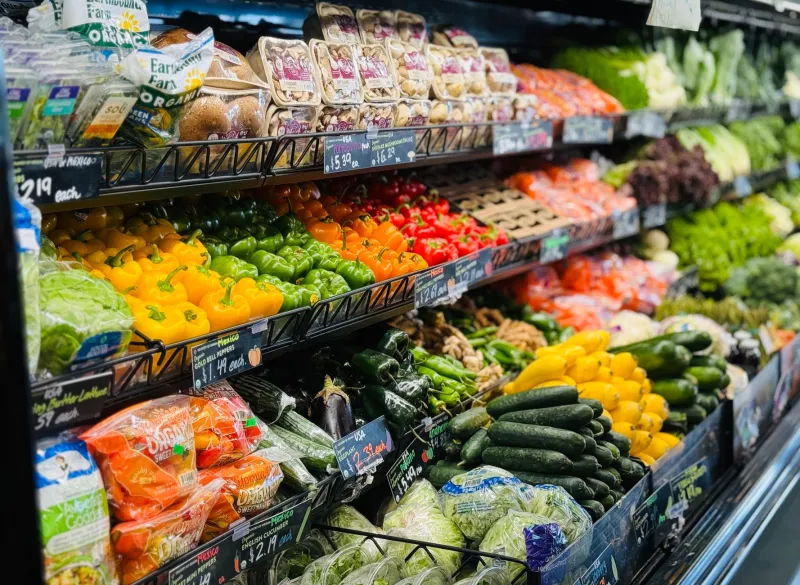
Your local Kroger or Publix carries tomatoes in December, asparagus in October, and strawberries basically year-round. Some of it is imported. Some of it is grown in controlled environments. Some of it is genuinely excellent, and some of it is genuinely mediocre. But the idea that you're going to build a coherent weekly menu based purely on what's "in season" at a standard grocery store is, frankly, a bit of a fiction.
The produce section doesn't change dramatically week to week. What changes is price and quality—and those are legitimate things to pay attention to, but they're different from the seasonal eating philosophy being sold in food media.
What a Hybrid Approach Actually Looks Like
The more sustainable model isn't seasonal eating or ignoring seasons entirely. It's a hybrid: a stable foundation of reliable staples, with seasonal produce added as a variable layer.
Think of your cooking rotation as having two tiers.
Tier one is your foundation. These are the ingredients that are consistently good, consistently available, and consistently useful regardless of the time of year. Canned tomatoes. Dried beans and lentils. Frozen peas, corn, and edamame. Onions, garlic, and carrots. Eggs. Cabbage. These aren't glamorous, but they're the backbone of a functional kitchen, and they don't require you to check a seasonal calendar before buying them.
Tier two is your seasonal accent. This is where you actually let the season guide you—but lightly. When corn is sweet and cheap in August, make it a regular addition. When citrus is excellent in January, use it aggressively. When summer tomatoes are genuinely good (as opposed to the pale, mealy grocery store version), let them star in your meals. But you're adding seasonal produce to an existing foundation, not rebuilding your entire menu around it every few months.
This approach gives you the best of both worlds: the freshness and quality that seasonal eating promises, without the repetition and decision fatigue that comes from treating "what's in season" as the only valid starting point.
Frozen Produce Deserves More Credit
One more thing worth saying plainly: frozen vegetables are, in many cases, just as nutritious as fresh—sometimes more so, because they're frozen at peak ripeness rather than shipped over long distances in a partially unripe state. The cultural baggage around frozen produce is largely undeserved.
For busy cooks, frozen vegetables are a practical lifeline. They don't go bad on a Tuesday because you forgot to use them. They cook quickly from frozen. They're available in consistent quality year-round. Building a core set of frozen vegetables into your regular rotation—spinach, peas, edamame, corn, broccoli—gives you reliable nutrition and variety without the pressure of timing your shopping around seasonal windows.
Cook for Your Actual Life, Not the Idealized One
Seasonal eating at its best is a beautiful thing. A summer tomato with good olive oil and flaky salt is one of the genuinely great food experiences available to anyone. But that doesn't mean your entire cooking philosophy should be organized around chasing peak produce.
The goal of modern home cooking isn't to replicate a farm-to-table restaurant experience in your apartment kitchen. It's to eat well, consistently, without burning yourself out on the process. A hybrid approach—stable staples plus seasonal accents—is more realistic, more flexible, and ultimately more sustainable than any ideology that requires you to reinvent your menu every three months.
Fresh is great when it's great. The rest of the time, a well-stocked pantry and a bag of frozen peas will take you further than any farmers market haul.